by Twenty40 Companies
Share
by Twenty40 Companies
Share

Just like almost every other industry, AI and real estate are now closely linked. Whether you notice it or not, it touches almost everything from listing descriptions to valuation estimates and project schedules. It’s done wonders for efficiency, but it’s also raised some fair questions about accuracy and privacy.
At Twenty40 Companies, our answer is simple. We use technology for administrative work, but an expert is always behind the decisions. Let’s talk about what that looks like in practice and what Eastern Iowa buyers, sellers, and developers should know about combining AI and real estate.
What Artificial Intelligence in Real Estate Actually Means
When most people hear artificial intelligence in real estate, they picture a chatbot or an AI-generated listing description. The reality, though, is often far less glamorous. We typically use AI to help:
- Organize documents
- Monitor schedules
- Build transaction checklists
- Categorize costs
- Retrieve information
- Handle routine follow-ups
- Schedule appointments with homeowners
The goal of using AI successfully in your work is to organize information, not to weigh it. Think of it as an administrative assistant, not a replacement for an engineer or real estate broker. AI tools can’t understand a family’s priorities, a neighborhood’s character, or the long-term consequences of a development decision.

How Twenty40 Uses AI-Assisted Project Management
In project management, we use AI to manage projects and transactions more efficiently. Our tech stack is as practical as our AI- assisted project management approach. We use:
- Microsoft 365 and Power Automate to streamline workflows
- Teams-based scheduling for construction crews and contractors
- Copilot-built Excel sheets for bids
- Dext to feed line-item, expense, and mileage data into QuickBooks
We also use AI to compare material costs and performance, locate specs and installation instructions, and turn our human-made 2D designs into 3D renderings.
Here is how we differ from many small to mid-sized construction and development companies. We see construction project management technology as a way to reduce administrative friction that can slow the process. Our experienced team members handle every material recommendation, negotiation, commitment, design choice, construction decision, and client communication.
Embracing Responsible AI in Real Estate
The National Institute of Standards and Technology (NIST) released an AI Risk Management Framework. This voluntary resource was designed to help organizations build trustworthiness considerations into how they use AI.
The framework offers a few excellent lessons we apply to our work at Twenty40. The first being that a confident answer is not the same as an accurate one. Generative AI can produce a polished summary of a contract, zoning rule, or cost estimate, even when its source material is incomplete.
Our rule is that one person compares every single AI-generated summary with the original document before anyone acts on it.

Using AI to Support Construction & Development Project Management
AI supports us not only in the office, but also in the field. Here are a few ways we use AI in construction management.
Adapting to Eastern Iowa Weather
One thing that makes Eastern Iowa so special is our weather. Anyone who lives in Cedar Rapids knows how quickly conditions can switch up. Between extreme weather like our region’s history of derechos and extreme flooding, our projects need detailed documentation, contingency planning, material coordination, and clear communication to succeed.
While AI tools can’t predict or prevent a storm, they can help organize risk information and response plans so they’re on hand when needed. Pairing that with experienced builders and contractors used to Iowa storms will help keep your construction schedules on track.
Keeping Up with Local Rules
While AI can help track the steps, zoning, permitting, inspections, building codes, utility coordination, and floodplain requirements vary by jurisdiction. An answer built on national information may be incomplete, outdated, or even irrelevant to your parcel.
One of the best ways to do this is to work with the right local professional who knows each town and municipality you’re working with. Having someone on your side who knows how to navigate Cedar Rapids’ specific permitting can make all the difference in keeping up with local rules and regulations.
That same caution applies to due diligence, too. An AI model might recognize patterns, but it cannot guarantee the correct knowledge of easements, covenants, title exceptions, utility access, or drainage conditions. You still need an expert who knows how to navigate FEMA’s Flood Map Service Center, as well as experts who understand the importance of proper surveys, inspections, title work, engineering, and legal review.
Faster Real Estate Transaction Management, Same Personal Service
AI doesn’t stop at construction. We also use it when the property changes hands between teams. A big caveat: Even though AI can make a real estate transaction more efficient, it’s not an excuse to make it less personal. Strong real estate transaction management means:
- Tracking inspection dates
- Financing milestones
- Filing document requests
- Coordinating closing requirements across buyers, sellers, lenders, and title companies
AI automation helps with those reminders, creating fewer opportunities for things to fall through the cracks. Using these tools shouldn’t be an obvious switch for your client, though. It should just feel like fewer surprises and more one-on-one time with a member of your team who can answer questions, evaluate options, and solve problems.
Privacy matters a lot here, too. Transaction files hold financial details, signatures, and confidential plans. This isn’t information that belongs in an unapproved public AI service. All final contract interpretation, legal advice, lending decisions, inspection conclusions, and title matters must remain in the hands of qualified, experienced human professionals.
And because property deals often involve urgent requests and money transfers, always verify wiring instructions or last-minute payment changes by calling a trusted phone number, not by replying to a random email.


Honest Representation: Photos, Valuations, and Fair Housing
AI can also be used when presenting properties to the public, but you must follow the rules. The Federal Trade Commission’s advertising and marketing guidance states that “claims in advertisements must be truthful, cannot be deceptive or unfair, and must be evidence-based.”
While virtual staging can help a buyer picture a vacant room, it must be clearly labeled as such. Other photo edits, like deleting power lines, changing views, concealing damages, enlarging rooms, or inventing renovations, also cross the line from visualization into misrepresentation.
Our standard is that technology should help people understand a property, but never blur fact with imagination. If you use virtual staging, label it conspicuously and keep the original photographs with the listing.
Pricing tools deserve the same scrutiny. Automated valuations are useful signals, but they are not inspections. They can miss property conditions, deferred maintenance, unique improvements, and location nuances that records don’t capture.
Treat an automated estimate as one input, then weight it against current comparable properties, physical condition, local expertise, and the intended property use.
Fairness is the third piece. The Fair Housing Act prohibits housing discrimination based on race, color, national origin, religion, sex, familial status, and disability. AI- supported marketing or screening can create risk if it excludes, discourages, or ranks people differently based on those characteristics.
Remember, AI is not inherently unbiased. They are trained on information created by humans, who are biased whether we realize it or not. Every model can reflect patterns in their training data and the choices made in deploying it. When using these tools, human oversight and personal accountability should stay central.
All of this points to one conclusion about the future of AI and real estate.
Human-Centered Real Estate: AI Plus Experienced People
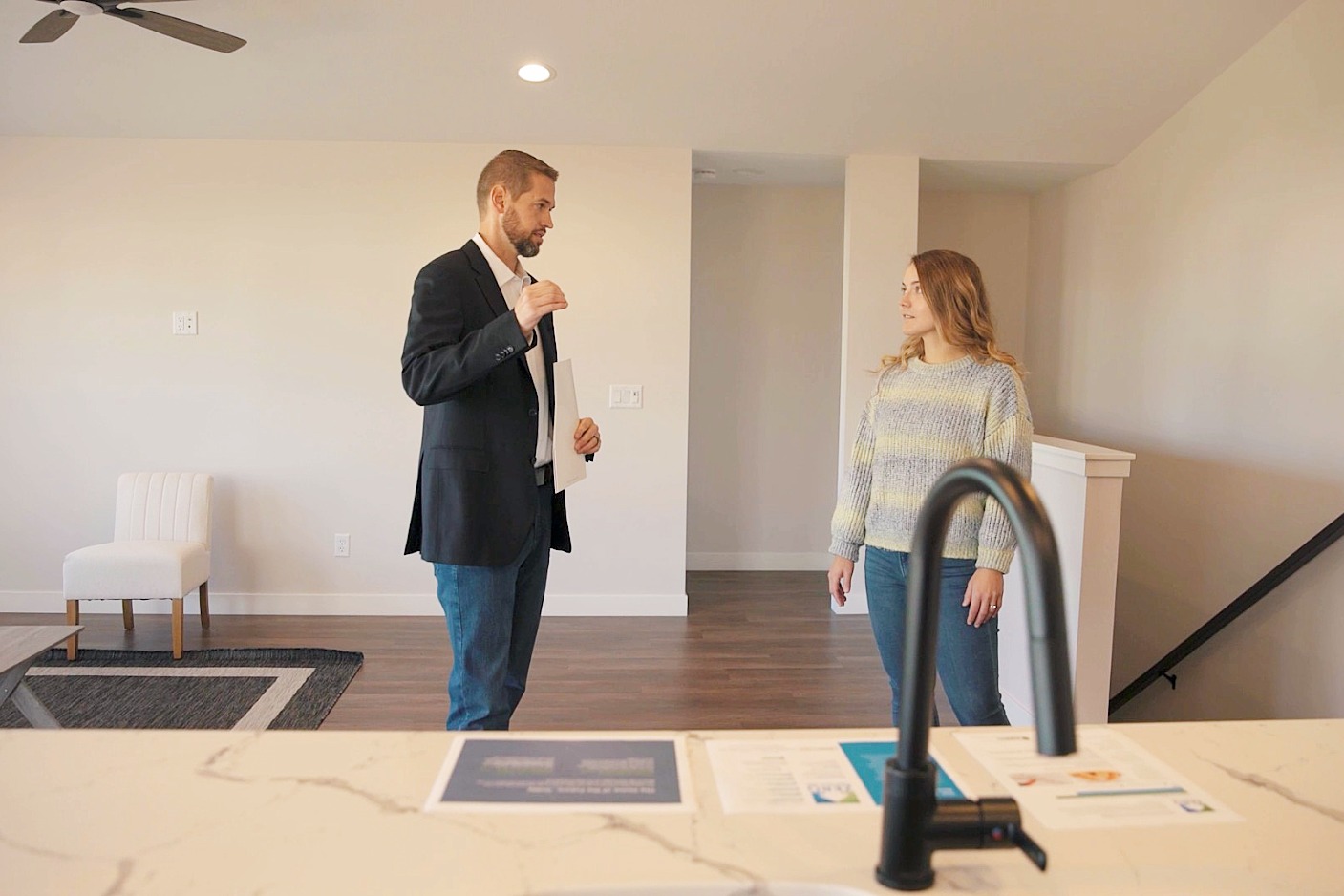
The strongest model is AI plus experienced people, not AI instead of people. AI adds speed and consistency and helps with repetitive work. But people bring judgment, empathy, negotiation, ethics, creativity, accountability, craftsmanship, and an understanding of what a project means for the surrounding community. That balance is the heart of human-centered real estate.
Our message is straightforward: we use technology to spend less time managing administrative friction and more time serving the people behind every transaction, project, business, neighborhood, and home.
Humanity is not an inefficiency to estimate. It is who Twenty40 serves, and it is part of every community and home we help build.
Planning a real estate transaction, development, construction project, or property improvement in Cedar Rapids or Eastern Iowa? Contact Twenty40 Companies to discuss how thoughtful project management, responsible technology, and experienced people can move your plans forward.
STAY IN THE LOOP
Subscribe to our free newsletter.
A new riverfront district is reconnecting two beloved Cedar Rapids neighborhoods: NewBo and Czech Village. Get to know East Bend & 2nd, Cedar Rapids' newest development that is designed to honor the Sinclair legacy while ushering in the new chapter of life along the Cedar River.
Mortgage rates ticked up, inventory stayed tight, and Cedar Rapids' data center boom kept rental demand red-hot this summer. Here's what buyers, renters, and investors need to know about heading into the Eastern Iowa real estate market in Q4 2026.
Twenty40 Companies is reshaping what an Iowa neighborhood can be! Discover how native prairie plantings at Dows Farm Agri-Community reduce erosion, improve water quality, and create a thriving pollinator corridor while making this neighborhood a sought-after community center.
Gen Z home buyers are changing the Iowa real estate market. Discover key trends, why Cedar Rapids is attracting first-time buyers, and how Twenty40 Companies can guide your home-buying journey.