by Twenty40 Companies
Share
by Twenty40 Companies
Share
Dows Farm Agri-Community is really something special. Everything from the first seed we planted to the first housing design that went public has been hand-curated to make this neighborhood something you couldn’t find anywhere else.
When designing Dows Farm, we wanted to combine the thriving energy of a busy community with the strong agricultural background that Iowa is known for. Tucked into the boulevards and detention basins here is a thriving stretch of native prairie that does a whole lot more than just look good – and it’s helping Iowans remember just how lucky we are to live right here in the heartland.
The Vision: A Habitat That Works For Everyone – And Every Plant
As part of our commitment to smart, sustainable development, everything we plant at Dows Farm has earned its spot. Instead of the usual turf grass that guzzles water and demands weekly mowing, we decided to plant native Iowa prairie species that pull serious double (and triple) duty.
These species are beautiful to look at, but they’re also feeding pollinators, holding soil in place, and managing stormwater better than any manicured lawn could ever dream of.
Rather than treating the green space here like an afterthought, we treated our landscaping design like infrastructure. All of our boulevards, basins, and naturalized pockets link together into one continuous habitat. It all works together for the benefit of our residents, the local wildlife, and the watershed alike.
So, why revitalize the prairie? And why here? To really appreciate what’s growing at Dows Farm, it helps to understand the history of what Iowa has lost and why it’s so important that we bring it back.
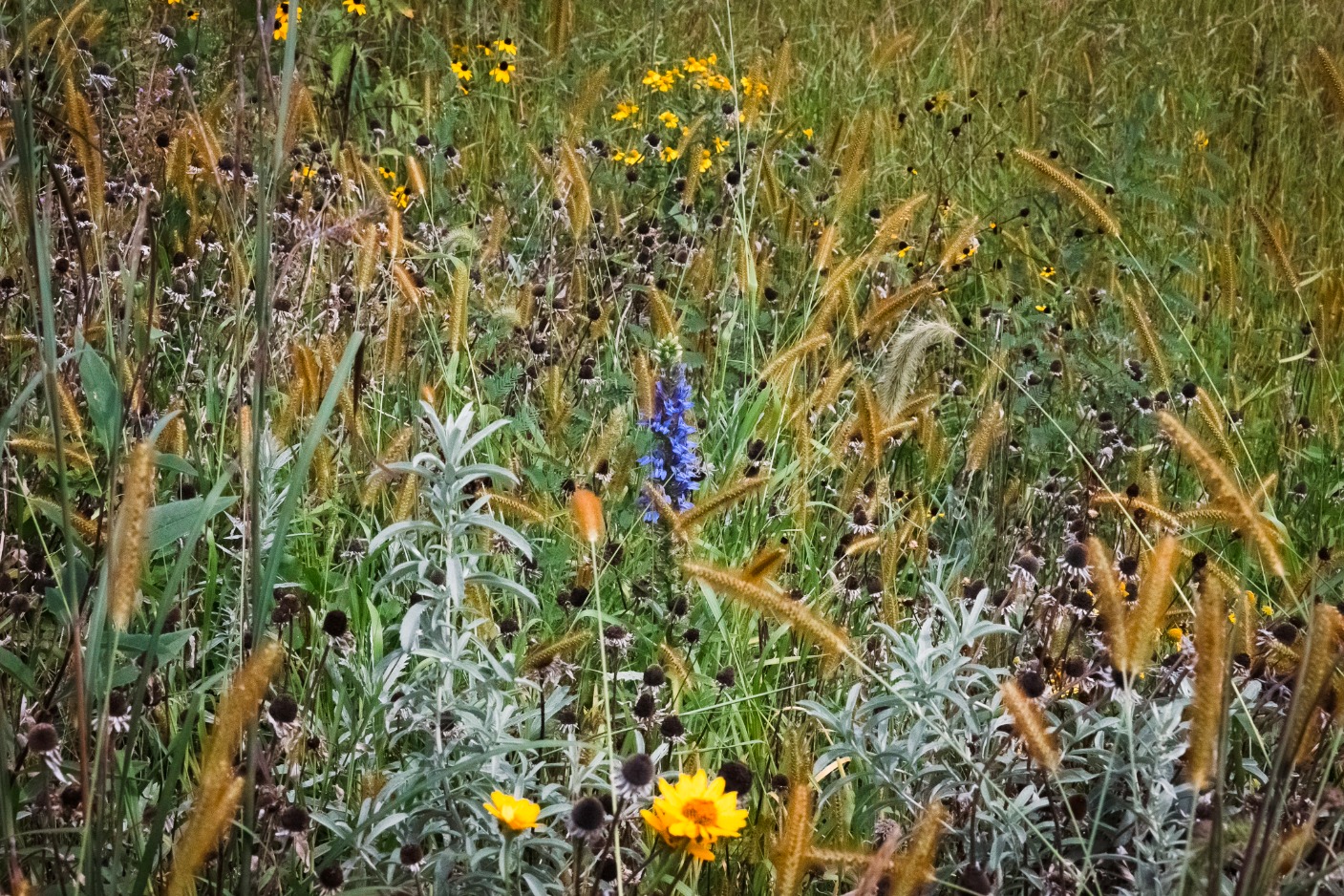
Prairie restoration and seed mix at Dows Farm Agricommunity
This photograph captures a vibrant prairie meadow at the Dows Agri-Community, featuring a mix of golden grasses, yellow wildflowers, and a striking blue lupine. The community is known for incorporating native prairie plants into its landscapes to enhance biodiversity and support local wildlife.
Why Native Prairie Matters in Iowa
Here’s a number that will stop you in your tracks: Roughly 30 million acres of tallgrass prairie once spread across Iowa. As the land was being developed, we lost a lot of that prairie grass. Today, only 0.1% remains.
That’s why, when we set out to design Dows Farm, we wanted to look into native prairie restoration. We wanted to create a community that looked beautiful but also gave back to Iowa.
There aren’t delicate plants that need coddling, either. Native prairie species spent thousands of years adapting to Iowa’s soil. They know how to survive our rainfall and our wild temperature swings. Their roots can plunge several feet underground, well past where thirsty turf grass ever bothers to reach.
Since they can naturally tap into nutrients that shallow-rooted lawns simply can’t reach, it reduces the need for intense irrigation systems. These species also have a higher drought tolerance and can shrug off Iowa’s well-known unpredictable weather, rather than wilting under it.
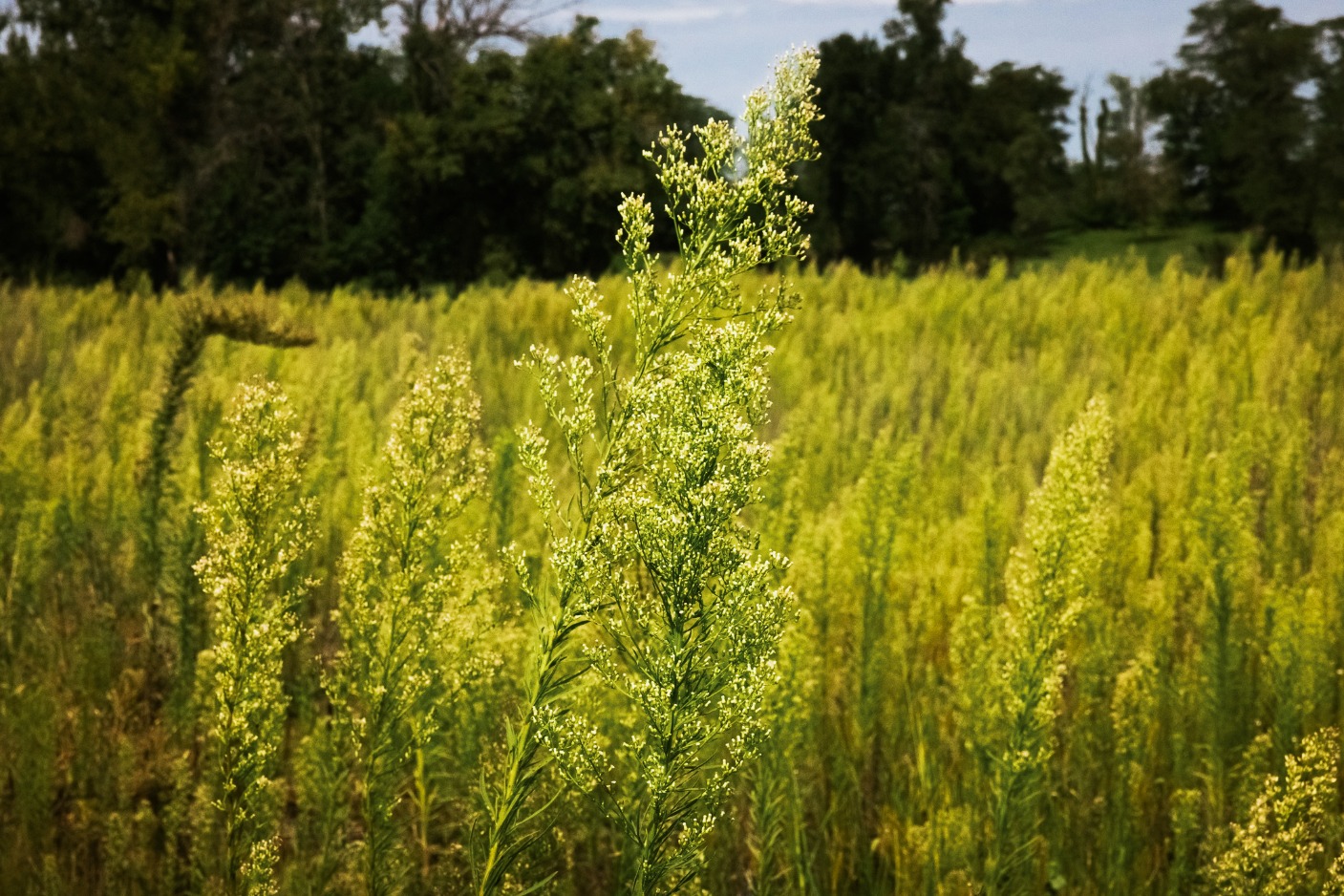
Horseweed in Dows Farm Agricommunity
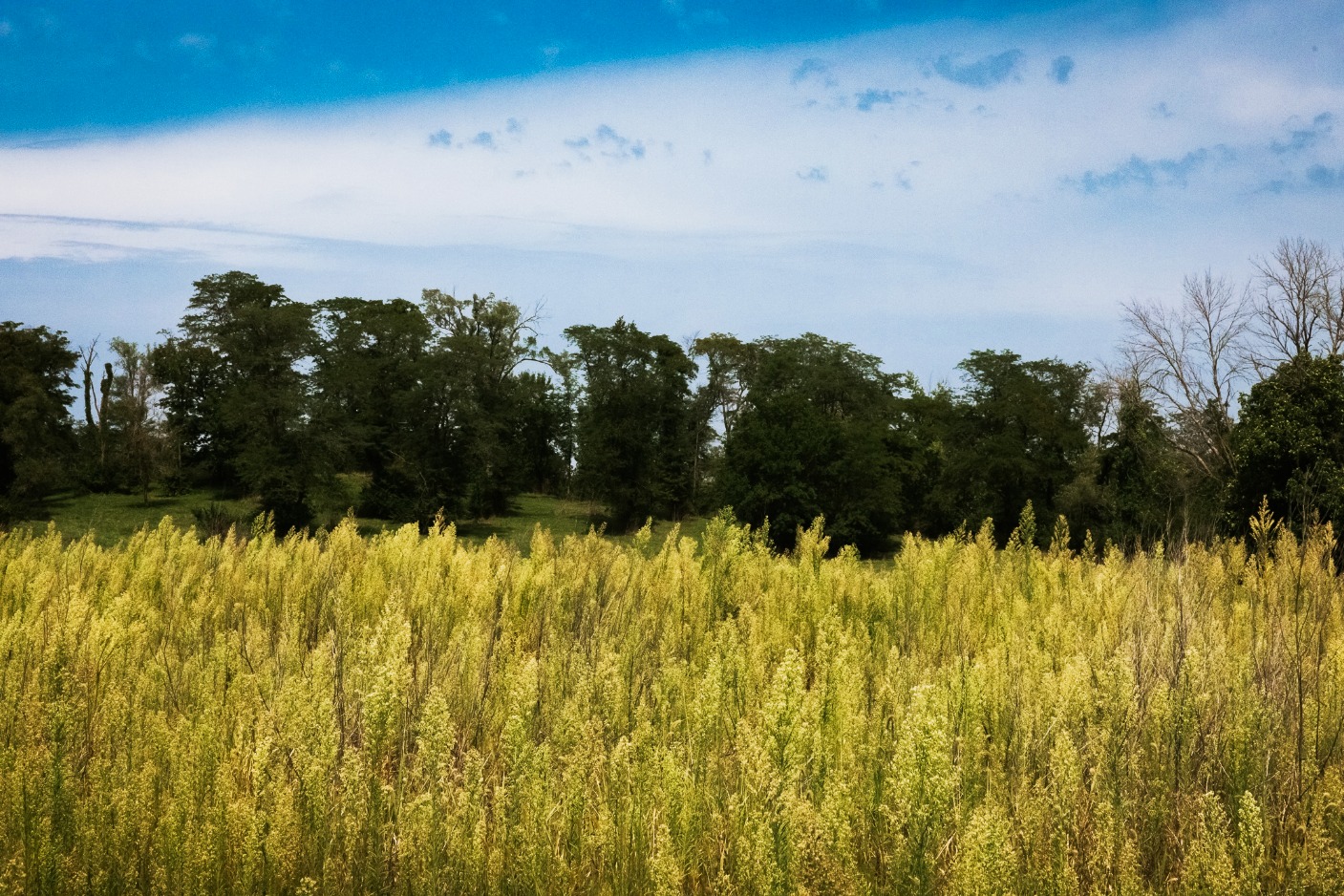
Horseweed is a native plant that supports a huge variety of small pollinators and beneficial insects. As the native prairie grasses mature over the next few years, they will naturally crowd out horseweed.
How Native Plantings Improve Water Quality
The native plantings we chose are beautiful to look at, but they’re also working hard underground. Along the boulevards and slopes near the detention basins, those deep native root systems are fighting erosion and holding the soil in place.
The positives don’t stop there. Native plants also help water soak into the ground, which slows stormwater runoff during heavy rains.
Think about what happens when a hard rain hits a compacted lawn. As the water rushes off, it takes sediment, fertilizer residue, and other pollutants straight toward the nearest waterway. Now picture that same heavy rain hitting a dense mat of prairie roots. Instead of flooding natural waterways, the roots filter it, cleaning it up before it ever flows downstream.
Iowa has always had unpredictable weather, but our storms have become more intense in recent years. Stormwater management designs are becoming more and more important. Ones that include native prairie plantings lead to lower flood risk, cleaner water, and a healthier watershed overall.
Boulevard and Detention Areas: Different Purposes, Connected Results
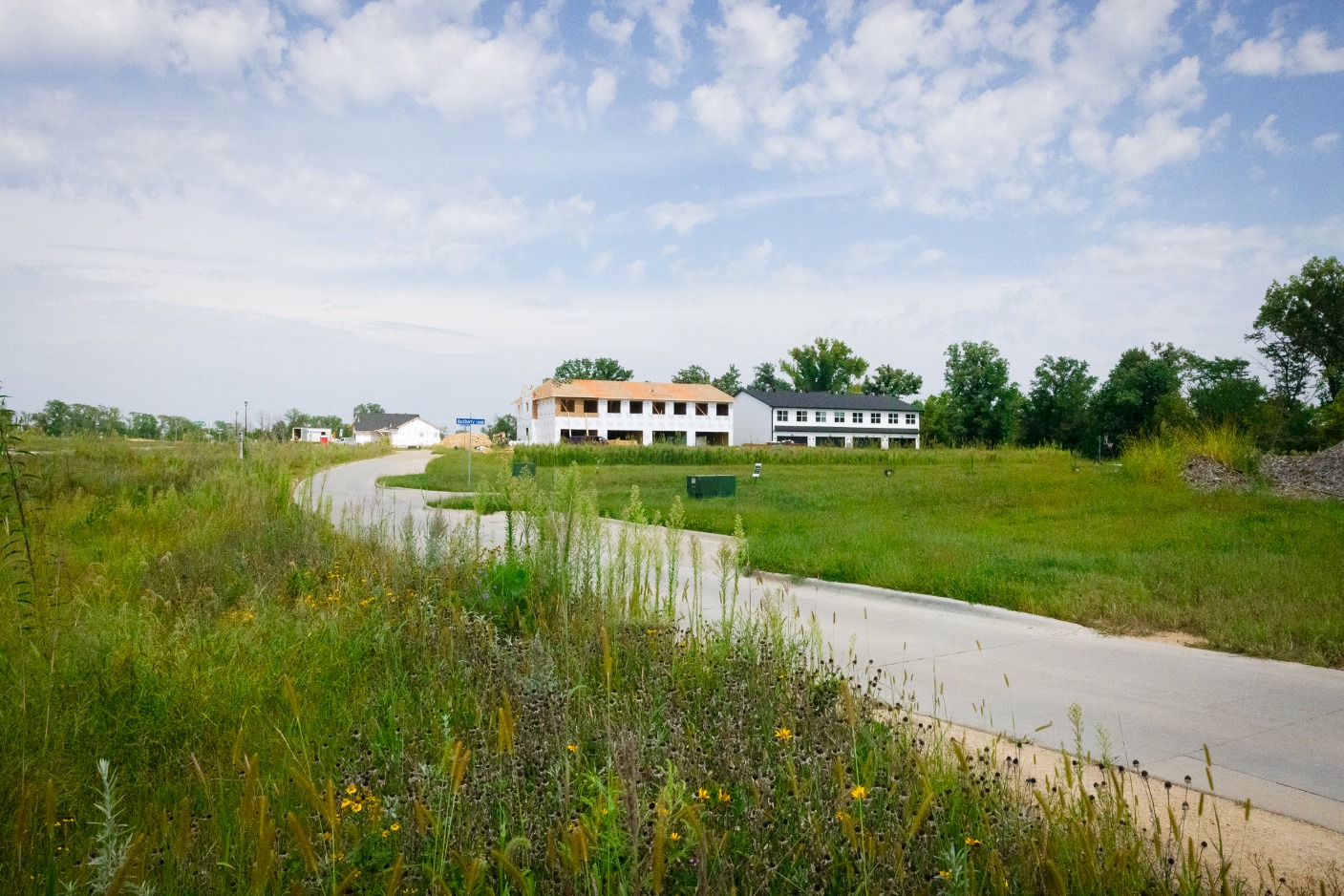
Not every patch of prairie here is doing the exact same job. Along the boulevards, the community relies on the PF CP42 Leopold #2 Pollinator Mix. We chose this partly because it stays low enough to keep sightlines clear. It creates a gorgeous pollinator habitat while still letting drivers see what’s around the corner.
Down in the detention basins, a tougher blend takes over – the PF CP25 Prairie 20/20 Mix. This blend was specifically designed for erosion control. Basins take a beating, and as water levels rise and fall, these resilient roots are exactly what’s needed to keep everything strong and healthy.
They’re different mixes with different jobs, but they both have the same mission. Whether it’s preserving sightlines on a boulevard or holding a basin together during a downpour, these plantings are all part of one connected pollinator habitat system.
Creating a Pollinator Corridor
If there’s one thing that makes people stop mid-walk and pull out their camera, it is a beautiful butterfly. By threading overlapping, complementary species throughout both boulevards and basins, we have created a continuous pollinator corridor that keeps buzzing (literally!) from spring through fall.
Milkweed does a lot of the heavy lifting here. It’s the only plant monarch caterpillars can eat, which makes it a genuine lifeline for the species that’s been struggling across North America.
Pair that with nectar-rich neighbors like Black-eyed Susans, purple prairie clover, partridge pea, and gray-headed coneflower, and you’ve got a delicious buffet that native bees, butterflies, and other pollinators can’t resist!
The real trick here, though, is the timing. Instead of every plant blooming at once and then leaving pollinators with nothing for months, the mix is staggered so something is always in bloom. No dead zones and no awkward gaps here! Just a steady, reliable food source from the first spring buds to the final golden days of fall.
Beyond the Neighborhood: How Pollinator Habitats Support Agriculture
It’s really tempting to think of this pollinator corridor as just a nice neighborhood perk for the residents of Dows Farm, but its reach goes well past the property line.
Healthy pollinator populations aren’t going to just stay here on our streets. They’re going to fan out into surrounding farmland, where bees and butterflies play a direct role in crop pollination.
That’s a pretty compelling plot twist if you ask us. A residential development that actually supports the farms around it, rather than competing for resources? We love to see it!
In a state where agriculture is practically part of the identity, that relationship really matters. Thoughtful native plantings like the ones at Dows Farm reinforce the ecological habitats that both farmland and thriving communities depend on.
This is a great reminder that conservation-minded design doesn’t just stop at the sidewalk. When it’s done right, it becomes part of something bigger.
A Landscape That Grows More Valuable Over Time
Unlike turf grass, a well-planted prairie will get better with age. A traditional lawn looks basically the same in year one as it does in year ten – same green, flat monotony with the same weekend mowing responsibility.
Native prairie grass doesn’t play that game. As root systems mature and plant communities settle in, the landscape becomes richer and more productive with every passing season.
That maturity pays off in very practical ways. Established native plantings need far less mowing, irrigation, or chemical treatments than conventional turf. Lower maintenance and a lighter environmental footprint? Sign us up!
Then there’s the visual payoff. Watching the prairie move through its yearly cycle is quite the show. The beautiful pops of color in the spring after a long, cold winter give way to the full-color summer season before it all fades into the rich, golden textures of fall.
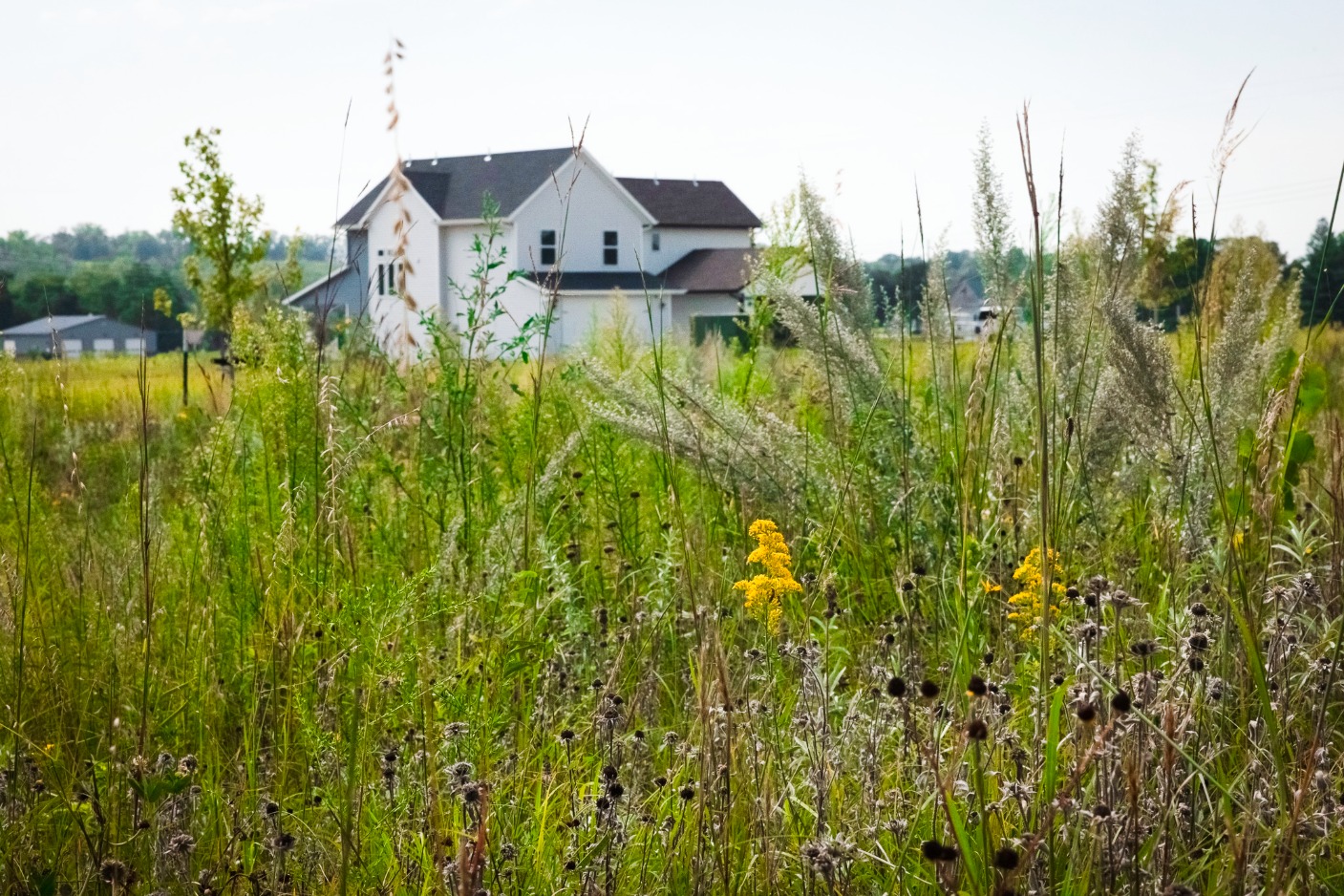
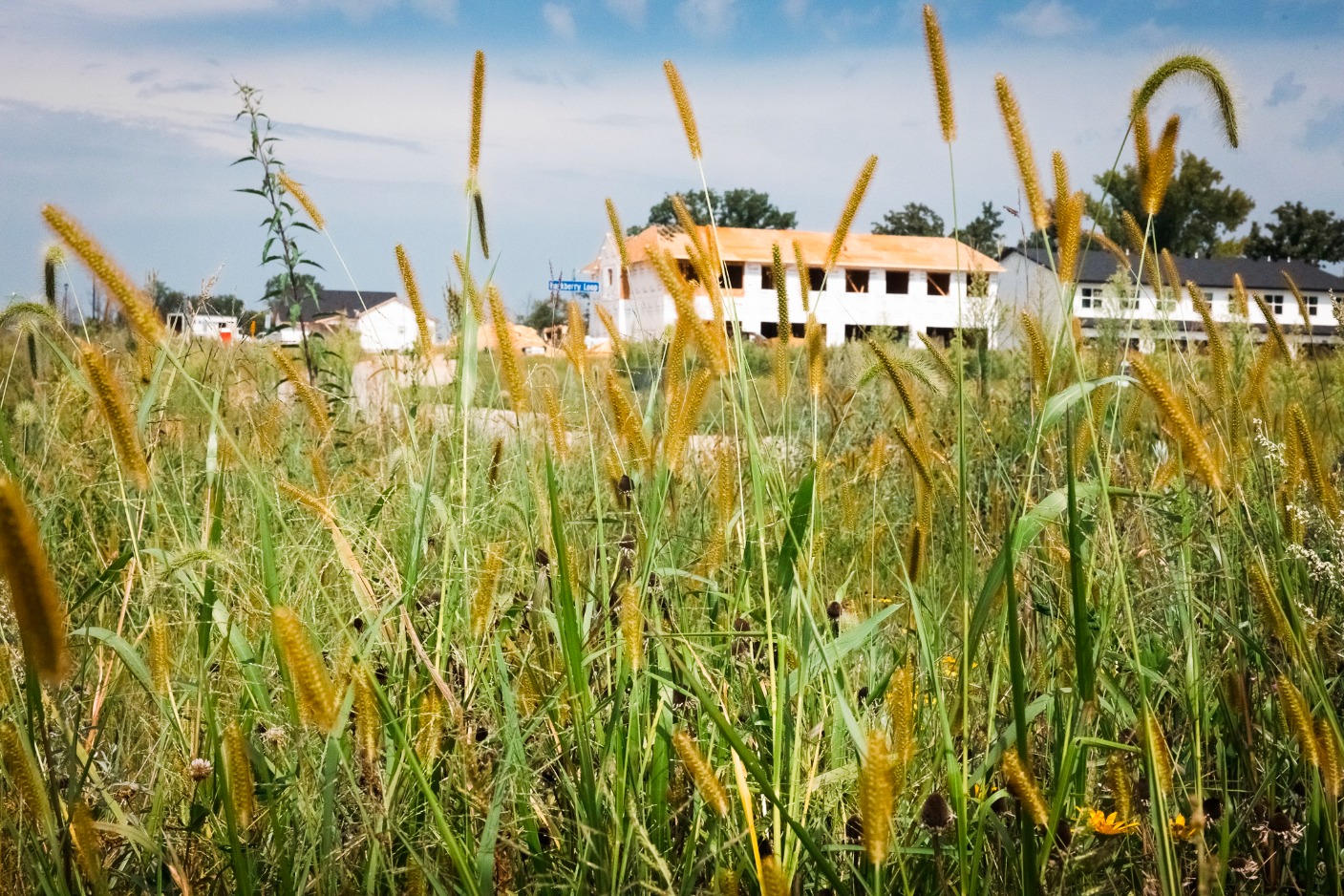
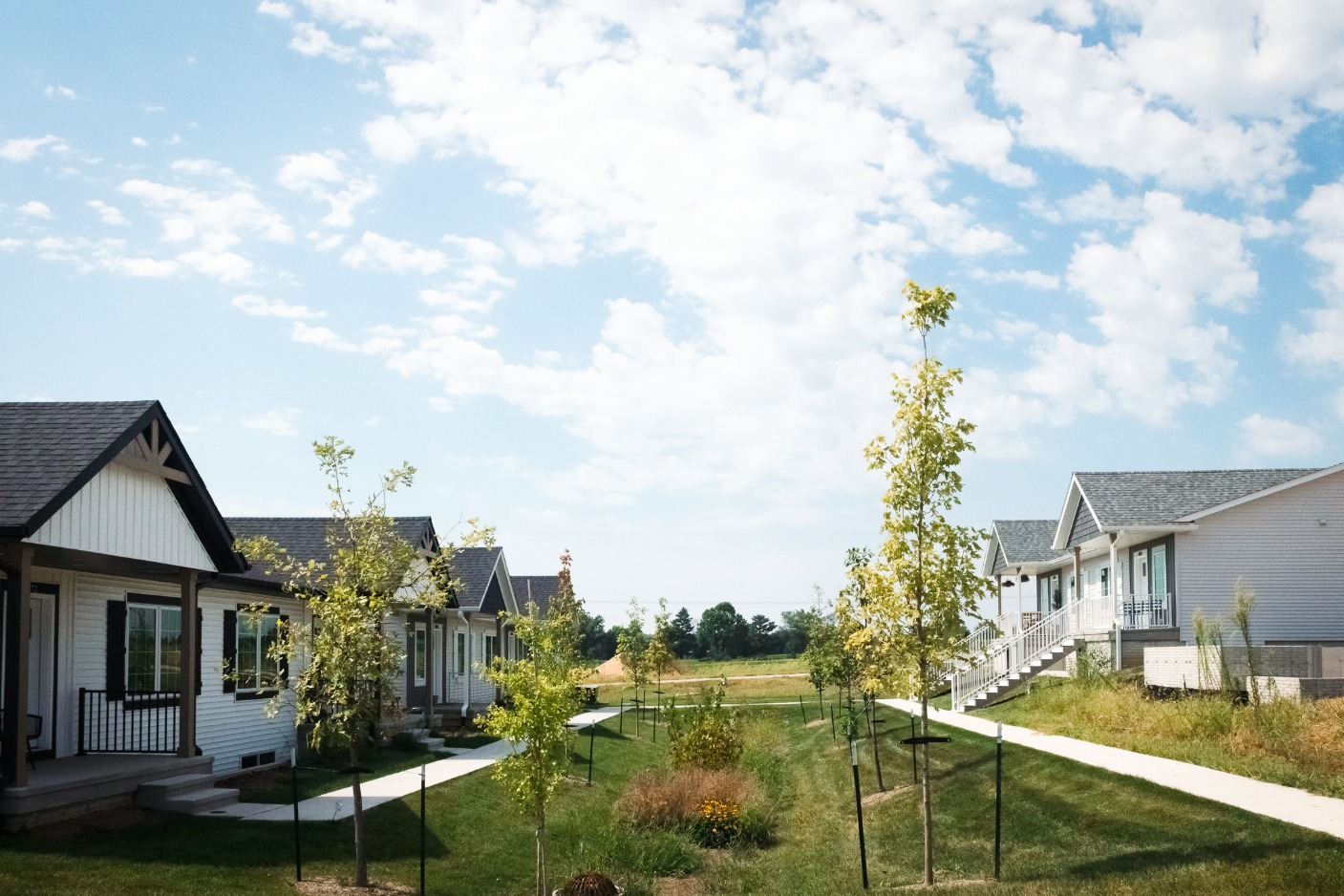
Tall native prairie grasses and wildflowers in Dows Farm
This photograph captures a home in the Dows Agri Community surrounded by tall native prairie grasses and wildflowers. The community is known for integrating native plant landscapes to enhance both the aesthetic appeal and ecological value of its properties.
Quality of Life Benefits for Residents
At the end of the day, this isn’t just about erosion control and water infiltration. The pollinator-friendly landscaping at Dows Farm also adds a sense of whimsy to life in this one-of-a-kind community.
Who wouldn’t want to live in a place where monarch butterflies are drifting through milkweed, bees are flying over prairie clover, and birds are singing during an ordinary Tuesday morning? It’s like a scene straight out of a storybook – and something that is truly original to Iowa’s developing real estate market.
Plenty of residents have also discovered a small, unexpected joy: fresh-cut native flowers, straight from their own neighborhood. Living here in Dows Farm proves that a place can be beautiful, functional, and genuinely good for the environment all at the same time.
Experience Dows Farm Agri-Community for Yourself
The native prairie is just one of the incredible one-of-a-kind benefits of living in Dows Farm. Between 88 acres of conservation land, trails, green spaces, a 10-year tax abatement, and more, it’s easy to see why so many people are building the lives of their dreams right here with Twenty40 Companies.
Interested in living in a community where conservation, agriculture, and thoughtful development all work together? Explore all of the ways Dows Farm Agri-Community is shaping a better way to call Iowa home!
STAY IN THE LOOP
Subscribe to our free newsletter.
A new riverfront district is reconnecting two beloved Cedar Rapids neighborhoods: NewBo and Czech Village. Get to know East Bend & 2nd, Cedar Rapids' newest development that is designed to honor the Sinclair legacy while ushering in the new chapter of life along the Cedar River.
Mortgage rates ticked up, inventory stayed tight, and Cedar Rapids' data center boom kept rental demand red-hot this summer. Here's what buyers, renters, and investors need to know about heading into the Eastern Iowa real estate market in Q4 2026.
Gen Z home buyers are changing the Iowa real estate market. Discover key trends, why Cedar Rapids is attracting first-time buyers, and how Twenty40 Companies can guide your home-buying journey.
Iowa weather is no joke. Learn how Twenty40 Companies builds custom homes in Cedar Rapids that go beyond code with impact-resistant roofing, energy-efficient design, and storm-ready systems built for the Midwest.